Vulnerability management is straightforward until budget runs out. A penetration test returns two confirmed exploitable findings: one affecting a revenue-generating website, one enabling exfiltration of sensitive customer data including payment card information. The security team has budget to fix one. Which gets prioritized?
The right answer is: it depends — and you need to actually measure the risk of each before deciding. That’s not a dodge. It’s the only defensible starting point for a risk prioritization conversation, and it’s what separates a security function that influences decisions from one that just produces reports. Everything covered in this series — architecture, assets, threats, risk formula, governance, controls — comes together in exactly this kind of applied decision.
The Framework: Risk = Likelihood × Impact
Both vulnerabilities are confirmed exploitable — the penetration tester demonstrated that. So likelihood is effectively equal and high for both. The differentiator is impact, and impact has multiple dimensions that don’t all point the same direction. This is where the impact column from the risk formula post becomes concrete: confidentiality, integrity, availability, regulatory, legal, and privacy consequences all need to be weighed.
Availability Vulnerability
- Direct revenue loss — quantifiable in dollars per hour of downtime
- Impact is immediate and visible
- Generally recoverable — restore service, bleeding stops
- Reputational damage exists but typically bounded
- Harm is primarily to the business itself
Data Exfiltration Vulnerability
- PCI DSS breach notification obligations triggered immediately
- Card network fines — potentially substantial and non-negotiable
- State and federal breach notification laws apply
- Class action liability exposure
- Harm extends to customers and card networks — external obligations you cannot unilaterally control or cap
Why the Data Breach Usually Wins
In most real-world scenarios the data exfiltration vulnerability should be fixed first. The core reason is irreversibility. Downtime ends when you restore service. A data breach never un-happens. You cannot recall exfiltrated credit card numbers. The harm to customers is real and ongoing from the moment data leaves your environment — and harm to individuals is, as noted throughout this series, the more fundamental concern.
The regulatory and legal tail risk shifts the calculus decisively. PCI DSS non-compliance following a breach can result in the business losing the ability to process card payments entirely — a more catastrophic revenue impact than any single outage. Fines, forensic audit costs, and litigation compound far beyond the initial incident. The revenue impact from downtime is bounded and estimable. Breach costs, especially with payment card data, are notoriously hard to cap and tend to grow as fraud surfaces and legal proceedings develop over months or years.
With the availability vulnerability, the harm is to the business. With the data exfiltration vulnerability, the harm extends to customers and third parties who create obligations the business cannot unilaterally control or cap. That asymmetry — internal harm versus external obligations — usually determines the priority. It’s also the reason privacy sits at the top of the ethical hierarchy in this series: the people whose data is compromised bear consequences they didn’t choose and can’t remedy themselves.
When You’d Flip the Decision
The calculus changes depending on what the vulnerabilities actually are. If the availability vulnerability is remote code execution on a payment processing system, it’s not just a revenue threat — it’s a potential pivot point to the sensitive data anyway, which makes it both vulnerabilities in one. Fix that first.
Similarly, if the data exposure involves hashed non-PCI data with limited fraud utility, the revenue threat from downtime may genuinely outweigh it. Context determines the answer. That’s why “it depends” is the correct starting position — not a failure to commit, but a commitment to measuring before deciding.
The Answer a Security Professional Actually Gives
A competent security practitioner doesn’t just pick one and walk away. They go back to leadership with a quantified comparison and a path forward that addresses both risks:
“Here is the quantified risk of each. The data breach carries regulatory and legal exposure that likely exceeds the revenue loss from downtime — PCI DSS breach fines alone can reach six figures, and that’s before forensic audit costs and litigation. We recommend prioritizing that remediation immediately. In parallel, we need to assess whether compensating controls — WAF rules, rate limiting, network segmentation — can reduce the likelihood of the availability exploit being triggered in production while we work toward a full fix.”
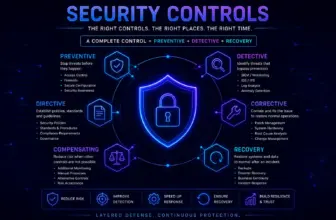
Compensating controls are the unlock that makes this a real answer rather than a forced binary. Budget fixes one vulnerability. Compensating controls reduce the other’s likelihood or impact in the interim. This is how a mature security program handles constrained resources — not by picking winners and losers, but by managing residual risk on both fronts simultaneously. It’s also how you demonstrate that the security function understands the business, not just the technology.
Upper management doesn’t care about CVSS scores. They care about dollars, liability, and headlines. Walking into that meeting and saying “this vulnerability has a CVSS score of 9.8” will get you a blank stare. Walking in and saying “a breach of our cardholder data at current transaction volume exposes us to an estimated $X in PCI fines, mandatory forensic audit costs, and class action liability — compared to $Y per hour in revenue loss from downtime” gets you a decision. That’s the difference between a security team that produces reports and one that influences outcomes. Quantify the risk in terms leadership already understands, and the prioritization conversation largely makes itself.
Whichever vulnerability gets deprioritized in the short term should be documented as accepted residual risk, with the compensating controls listed and a target remediation date. Under most compliance frameworks — PCI DSS, ISO 27001, NIST RMF — risk acceptance requires documentation and named ownership. An undocumented deprioritization isn’t risk acceptance, it’s just ignoring something, and it creates liability if that vulnerability is later exploited. The documented record is also what protects the security team when leadership’s memory of the conversation conveniently fades.
Risk prioritization is where everything in this series converges. You need to understand the architecture to know what’s at risk. You need the asset inventory to know what the impact would be. You need threat identification to assess likelihood. You need the risk framework to structure the comparison. You need governance to have the authority to recommend. And you need the ability to translate all of it into language leadership can act on.
That’s the complete picture — and it’s what a GRC practitioner who’s done the work actually looks like in a room.